A line has been circulating about the U.S. Secretary of State that compresses the political-economy chapter of the sugar story into a single sentence: that Marco Rubio, whose career was bankrolled by a billionaire Cuban-exile family of sugar barons — and whose home once sat at the centre of a $75-million drug-trafficking ring — wants to destroy Cuba and its people. Three of the four pieces of that claim hold up under checking. One needs sharpening. This annex walks through them in order so the named version exists, with sources, without dragging the named cast into the structural essay next door.
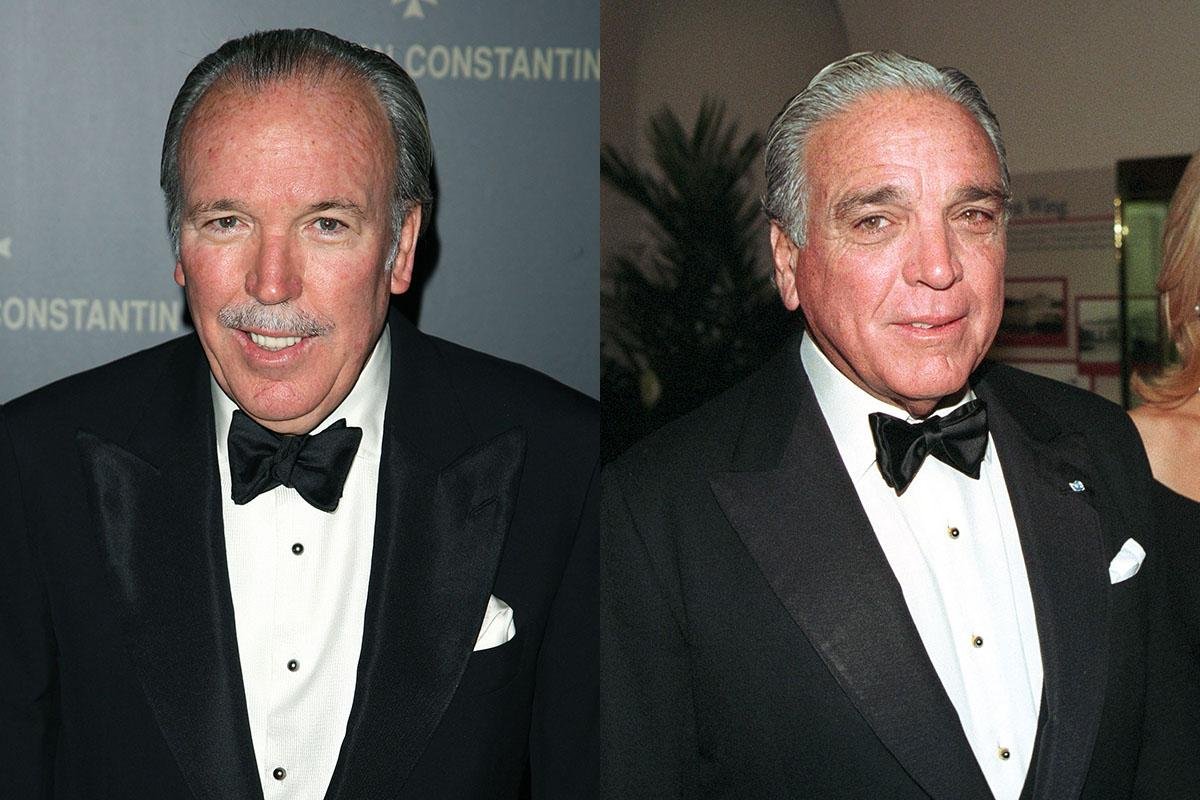
The Fanjul family — Cuban exiles who own American Sugar Refining Verified
The five Fanjul siblings — Alfonso "Alfy" Jr., José "Pepe", Alexander, Andrés, and Lillian — are Cuban-born, the children of a sugar-baron family that left the island after the 1959 revolution and rebuilt the business in South Florida. They control Fanjul Corp., whose holdings include American Sugar Refining — the world's largest sugar refiner — along with the Domino, C&H, Redpath, and former Tate & Lyle sugar brands. Florida Crystals, the U.S. cane operation, is the family's flagship; Flo-Sun is the holding entity above it. Combined family net worth is estimated in the multi-billions.
Bankrolled Rubio's career Verified
The Fanjuls have backed Rubio since his first state-legislature race in 2000. In March 2009 — when his 2010 U.S. Senate run was still polling in the single-to-low-double digits — Pepe Fanjul and his son José gave Rubio the maximum allowable donation; the family co-hosted a fundraiser for him in Coral Gables that June. Across his Senate career, Rubio is the largest single recipient of Fanjul political largesse among currently serving federal officials, with reporting in the range of $280,000+ directly to him from the family and their companies, and a wider figure approaching $500,000 when affiliated giving in support of Rubio is included.
The sugar-price-support program these donations sit behind is not a small or abstract subsidy. In Q3 2015, U.S. raw-sugar prices ran 24.46¢ per pound against a world price of 11.29¢; the program is held in place by USDA non-recourse loans pegged at 18¢ per pound, with import quotas backing the differential. Two firms dominate the protected market: U.S. Sugar and the Fanjul-owned Flo-Sun. Rubio has consistently defended the program from inside the Senate — when pressed at a Heritage Action summit, his stated position was that he would eliminate sugar subsidies "as long as Brazil does as well", a contingency that has yet to resolve in any direction. The conservative American Enterprise Institute, hardly a left-wing outlet, has called the arrangement "crony capitalism" and named Rubio's defence of it specifically.
"Wants to destroy Cuba and its people" Editorial
Not a factual claim a check can resolve. Rubio is one of the U.S. government's most prominent hardliners on Cuba sanctions and policy; what that record adds up to as a description of intent is a political judgement. The annex registers it and moves on.
"His home was the centre of a $75-million drug trafficking ring" Needs sharpening
The house in question was not Rubio's. It belonged to his brother-in-law, Orlando Cicilia, who was married to Rubio's older sister Barbara. The property, in West Kendall, was used by the wider Miami cocaine-trafficking ring led by Mario Tabraue to store and package kilos for distribution. In the mid-1980s, a teenage Rubio and his family lived in the house for about a month before his father bought a place in West Miami.
The house was seized in the 1987 federal sting Operation Cobra. Cicilia was convicted in 1989 and sentenced to 35 years for his role distributing cocaine for the Tabraue ring; reporting describes his personal distribution at roughly $15 million, with the larger Tabraue organisation accounting for the nine-figure totals that get cited around the case. He served about twelve years. Rubio, fourteen at the time, has said he was unaware of the operation, and the contemporaneous record gives no reason to doubt that.
The adult connection, however, is on the public record. In 2002, while serving as majority whip in the Florida House of Representatives, Rubio wrote a letter on statehouse letterhead recommending Cicilia — by then released — for a Florida real estate licence "without reservation".
Why this is an annex, not part of § 03
The main essay argues — deliberately — about an architecture rather than a cast of villains. Naming people inside § 03 would invert the structural posture the rest of the piece is built on: replace one named donor with another and the loop runs unchanged. The annex exists for readers who want a specific case to think about, while leaving the structural reading intact in the main text.
Read the annex the way it is offered. The named case is consistent with the structural reading, but it is not the structural reading. A different secretary of state, a different sugar family, a different state's politics, and the loop would still close on the same prefrontal tissue, in the same population, for the same reasons. The named case is one closure of the loop. It is not the loop.
- Carol D. Leonnig & Manuel Roig-Franzia, "The drug-smuggling case that brought anguish to Marco Rubio's family," Washington Post, Dec 12, 2015.
- Tim Elfrink, "Marco Rubio's Ties to a Drug-Smuggling Brother-in-Law Were Closer Than Advertised," Miami New Times.
- Bill Scher, "Marco Rubio's Miami Vice Problem," Washington Monthly, Dec 31, 2015.
- "Report: Rubio used whip position to help brother-in-law," The Hill — on the 2002 statehouse letterhead letter for Cicilia.
- Lee Fang, "Marco Rubio, Following Donor Dollars, Frequently Veers From Limited-Government Dogma," The Intercept, Jan 31, 2016 — on the donation totals.
- Jay Weiser, "Marco Rubio needs to get past his sugar problem," American Enterprise Institute, Nov 2015 — on the Fanjul donations, the price-differential figures, the USDA loan structure, and the "as long as Brazil does as well" position.
- Luigi Zingales et al., "Meet the Sugar Barons Who Used Both Sides of American Politics to Get Billions in Subsidies," ProMarket, Sep 19, 2016.
- Fanjul family — Wikipedia — background, corporate structure, exile history.